Here is the strange thing about socks:
When they are brand new, almost all of them can look pretty good.
Fresh colours.
Soft fabric.
Neat shape.
Clean packaging.
Put two pairs next to each other on a shelf and the difference between an ordinary sock and a genuinely premium quality sock may not immediately seem dramatic.
Then wear them.
Wash them.
Wear them again.
And suddenly, the differences become much harder to miss.
One pair begins feeling rougher. The surface starts fuzzing. The cuff loses some of its grip. The heel stretches. Colours look less vibrant. Threads begin appearing where they shouldn’t.
The other pair?
It still feels like the pair you actually wanted to buy.
That is where premium sock quality really begins.
Not in the packaging.
Not in a fashionable brand name.
And certainly not in the price tag alone.
Premium socks earn their premium through the quality of the yarn, precision of the knitting, fit, finishing and how well those qualities survive real life.
So, are premium socks actually worth paying more for?
Let’s look inside the sock.
What Makes a Sock “Premium”?
There is no universal rule stating that a ₹500 sock is premium while a ₹150 sock isn’t.
Price is not a technical specification.
A genuine premium sock should justify itself through things you can see, feel and experience over time.
Broadly, the difference looks something like this:
| Ordinary Construction | Premium Construction |
|---|---|
| Commodity yarn chosen largely around cost | Higher-quality yarn chosen for feel and performance |
| Coarser or less refined knitting | Fine, controlled knitting |
| Basic fit | Engineered stretch and recovery |
| Minimal attention to pressure points | Considered heel, toe, cuff and foot construction |
| Can look excellent when new | Designed to continue looking good after repeated wear |
| Softness may deteriorate quickly | Better retention of hand feel |
| Greater potential for fuzzing and pilling | Cleaner, smoother surface construction |
| Basic functionality | Designed around a particular wearing experience |
And here’s the important part:
Premium does not mean complicated.
Often, it simply means that somebody cared about details that cheaper production can afford to ignore.
1. Premium Socks Start With Better Yarn
Before a sock becomes a sock, it is yarn.
And before it becomes yarn, it is fibre.
That is where quality begins.
Two socks can both say “cotton” on the label and feel completely different.
Why?
Because cotton varies.
So does bamboo-derived yarn.
So does wool.
So does almost every textile fibre.
Better Cotton Can Produce Better Yarn
Higher-quality cotton is generally selected for characteristics such as:
- Fibre length
- Fineness
- Strength
- Uniformity
- Cleanliness
Combed cotton goes through an additional process designed to remove shorter fibres and impurities, helping produce a smoother, more consistent yarn.
That smoother yarn can contribute to a cleaner knitted surface and more refined feel against the skin.
So when you’re comparing two cotton socks, the question should not simply be:
“Are both made from cotton?”
Ask:
“What quality of cotton, yarn and construction am I actually getting?”
The fibre name is only the beginning of the story.
2. Fine-Gauge Knitting Can Completely Change How a Sock Feels
This is one of the biggest differences between basic and premium sock construction — and one most consumers are rarely told about.
Socks are knitted on circular machines containing a specific number of needles.
Broadly, more needles allow finer yarns and more detailed, refined constructions to be created.
Sock Republic uses 200-needle fine jacquard knitting across many of its signature funky socks.
The result can be:
- A smoother surface
- Finer pattern definition
- Less unnecessary bulk
- Cleaner design details
- A denser, more refined feel
Think HD versus low resolution.
You can display the same design in both.
It simply does not look the same.
If you want to understand the construction in detail, read our guide to why 200-needle socks make such a difference.
And at the very top end of the scale, Sock Republic’s SR LUXE collection goes even finer, with selected Egyptian Giza 45 cotton socks produced using 240-needle construction on Italian-made Busi machines.
That is what premium can look like when construction becomes precision engineering.
3. Premium Socks Should Fit Better — Not Simply Feel Tighter
A sock has a surprisingly difficult job.
It has to stretch enough to pass over your heel.
Then recover.
Grip the foot.
Stay up.
Move with you.
Avoid bunching.
And repeat that cycle hundreds of times.
That is why quality socks usually use supporting fibres such as elastane or Spandex alongside their primary fibre.
Those fibres are not necessarily there to make the sock “less premium.”
They perform an important technical function.
The Real Test Is Recovery
Stretch a sock.
What happens next?
A good sock should want to return towards its original dimensions.
Without sufficient recovery, socks can gradually:
- Sag around the ankle
- Become loose around the heel
- Twist inside footwear
- Slide down the leg
- Lose their original shape
Premium fit is therefore not about making the sock uncomfortably tight.
It is about controlled stretch + controlled recovery.
The sock should move.
Then remember where it belongs.
4. The Heel and Toe Tell You a Lot About Quality
Not every part of a sock receives the same amount of stress.
The heel rubs against footwear.
The toes flex thousands of times.
The ball of the foot bears repeated load.
These are the places where weaker construction tends to reveal itself first.
Premium socks may address those areas through:
- Reinforcing yarns
- Denser knitting
- Better heel formation
- More precise toe closing
- Strategically stronger construction
This matters because a sock isn’t useful simply because 90% of it remains intact.
One hole at the toe is enough to retire the entire pair.
Good construction focuses quality where the sock needs it most.
5. Premium Socks Should Feel Better at the Toe
There is a small detail you may never think about until it annoys you:
the toe seam.
A bulky, rough or poorly positioned seam sits inside your shoe and moves with your toes throughout the day.
A better-finished toe can create a much smoother wearing experience.
This becomes especially noticeable in:
- Dress shoes
- Loafers
- Running shoes
- Close-fitting footwear
- Long days on your feet
Premium quality often lives in exactly these kinds of details.
The things nobody sees.
But you feel.
6. The First Wash Is Where Quality Stops Hiding
The showroom test tells you very little.
The washing machine tells you much more.
A poorly made sock may begin showing surface changes surprisingly early:
Fuzzing.
Linting.
Pilling.
Loose fibres.
Colour loss.
Loss of softness.
Distortion.
Weakening around high-friction areas.
A genuinely well-constructed sock should be designed to retain much more of its original character through repeated washing.
That does not mean a premium sock is indestructible.
Textiles age.
Fibres wear.
Colours eventually change.
But the rate of deterioration can be dramatically different.
This is so important that we have a complete Sock-ology article dedicated to it: “How Do Your Socks Look and Feel After the First Wash? The Real Test of Sock Quality.”
Because the best time to evaluate sock quality isn’t before the first wash.
It is after it.
7. Premium Socks Should Keep Their Colour Better
Colour is another detail that separates a beautiful new product from a well-made one.
A vivid sock can look spectacular on day one.
The real question is:
What does it look like on day 100?
Colour retention depends on more than simply choosing attractive shades.
It involves:
- Yarn quality
- Dye compatibility
- Dyeing process
- Fixation
- Washing
- Finishing
- Care
Premium production should pay attention to colourfastness so that colours remain attractive and patterns remain crisp when the socks are washed according to their care instructions.
And with funky socks, this becomes especially important.
The entire design may depend on strong contrast and sharp visual definition.
A pattern that fades into itself is no longer the pattern you bought.
8. Premium Doesn’t Mean One Particular Material
There is no single “premium sock fibre.”
Different materials solve different problems.
Premium Combed Cotton
Excellent for everyday comfort, versatility and natural softness.
Bamboo-Derived Fibres
Popular for an exceptionally smooth, soft next-to-skin feel and strong moisture absorption.
If you’re curious, read our complete guide to the benefits of bamboo socks.
Egyptian Giza Cotton
Exceptionally fine cotton can create remarkably smooth, refined yarns for true luxury constructions.
Sock Republic’s finest luxury socks combine rare Egyptian Giza 45 cotton with ultra-fine 240-needle knitting.
Performance Fibres
Running, gym and athletic socks have different priorities.
Technical fibres can contribute:
- Faster drying
- Elastic recovery
- Abrasion resistance
- Support
- Moisture management
That is why Sock Republic’s SR FIT Performance Socks are engineered differently from an everyday cotton dress sock.
Premium means choosing the correct material for the job — not forcing one fibre to do everything.
9. Premium Running Socks and Premium Dress Socks Shouldn’t Be the Same
This is another reason “premium” is about more than price.
Consider two situations.
You’re Running 10 Kilometres
You may want:
- Moisture management
- Breathability
- Cushioning
- Heel security
- Midfoot support
- Reinforcement
- Secure stretch
You’re wearing Dress Socks with formal shoes to a Wedding
You may want:
- Fine fabric
- Minimal bulk
- Smooth surface
- Refined colour
- Elegant pattern
- Soft toe construction
Those socks should not be engineered identically.
The best premium socks are purpose-built.
Sock Republic approaches its ranges in the same way:
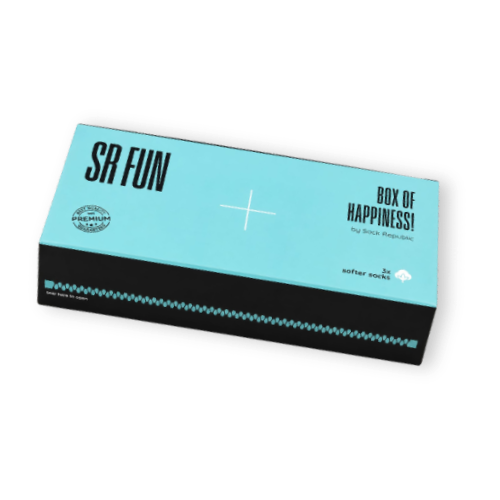
SR FUN for expressive fine-knit designs.
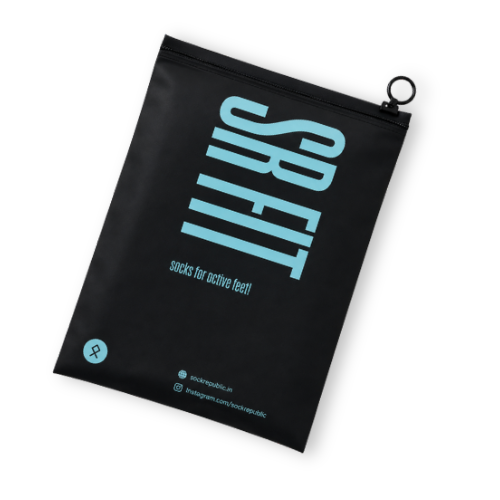
SR FIT for performance-focused construction.
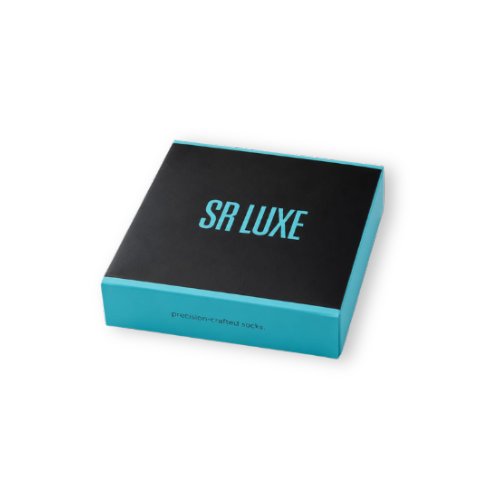
SR LUXE for exceptional materials and ultra-fine knitting.
Different socks.
Different jobs.
Different definitions of premium.
10. Premium Socks Can Be More Comfortable Without Being Thicker
One of the most common misconceptions is:
Thicker sock = better sock.
Not necessarily.
Thickness can provide cushioning.
But refinement often comes from doing more with less bulk.
Fine yarn + dense knitting can produce a sock that feels smooth and substantial without occupying unnecessary space inside your shoe.
This is particularly important with:
- Dress shoes
- Loafers
- Slim sneakers
- Tailored outfits
A quality sock should complement the footwear.
Not fight for space inside it.
11. Good Socks Should Almost Disappear Once You’re Wearing Them
Think about a bad sock.
You notice it.
It slides.
It wrinkles.
It twists.
The seam annoys you.
The elastic digs in.
The heel moves.
You keep adjusting it.
Now think about an excellent sock.
You put it on.
And eventually forget about it.
That is a surprisingly useful definition of comfort.
Good socks remove distractions.
You should be thinking about your day, not what is happening between your foot and your shoe.
12. Better Socks Can Make Better Shoes Feel Better
Imagine spending ₹10,000 on beautifully made shoes.
Then placing a rough, poorly fitting textile between those shoes and your feet.
It does not make much sense.
Socks are the interface between:
foot → sock → shoe
The quality of that interface affects how the entire combination feels.
A smoother sock can sit better inside refined footwear.
A better-fitting sock can reduce bunching.
A fine-gauge dress sock can complement a beautifully fitted formal shoe far better than a bulky construction.
Your shoes and socks do not operate independently.
They work together.
13. Premium Socks Are Also About Style
For decades, socks were treated as background clothing.
Black.
Grey.
Navy.
Preferably unnoticed.
That has changed.
Socks can now be:
- A controlled pop of colour
- A continuation of an outfit
- A conversation starter
- A way to break formal dress rules slightly
- A surprisingly effective expression of personality
This is where construction matters again.
Detailed patterns require precision.
A finely knitted geometric design looks different from the same idea executed on a coarse knit.
That is one reason Sock Republic uses fine jacquard construction across its signature funky socks.
If you’re looking to explore that side of the wardrobe, browse our Funky Socks collection for expressive 200-needle designs, or discover our Dress Socks for a more refined formal finish.”
This is the most natural contextual placement because the Funky Socks page is specifically built around bold patterns and fine 200-needle detailing, while the Dress Socks page targets formal, office, wedding and smart-casual use.
14. The Best Premium Socks Are Designed to Age Gracefully
Premium does not mean:
“Looks perfect forever.”
Nothing made from yarn works like that.
It means the product should resist premature deterioration.
A quality pair should retain as much as possible of its:
- Shape
- Softness
- Stretch
- Colour
- Pattern definition
- Surface quality
- Comfort
through repeated appropriate wear and washing.
That word — appropriate — matters.
Even exceptional textiles can be damaged by:
- Excessive heat
- Bleach
- Harsh tumble drying
- Aggressive detergents
- Incorrect washing
Buying better socks and then cooking them in a dryer is a slightly expensive experiment.
Always follow the care label.
15. Premium Socks Can Actually Offer Better Value
This is where the conversation becomes interesting.
Most shoppers compare socks by purchase price.
A better metric is:
cost per wear.
Imagine two pairs.
Pair A costs ₹150 and you enjoy wearing it perhaps 10 times before it becomes rough, stretched, visibly worn or uncomfortable.
₹150 ÷ 10 = ₹15 per wear.
Pair B costs ₹400 but remains a pair you genuinely enjoy wearing 50 times.
₹400 ÷ 50 = ₹8 per wear.
The more expensive sock has become the cheaper sock.
Those numbers are only an illustration — actual sock life depends on construction, usage, footwear and care.
But the principle matters.
Cheap to buy and good value are not always the same thing.
What Makes Premium Socks Worth the Price?
This is ultimately the question.
Not:
“Why are these socks more expensive?”
But:
“What am I receiving for the difference?”
A premium price becomes defensible when it buys you meaningful improvements in:
- Material quality
- Yarn refinement
- Knitting precision
- Fit
- Elastic recovery
- Reinforcement
- Finishing
- Colour retention
- Wash durability
- Purpose-specific performance
- Overall wearing experience
If none of those things are better?
You may simply be paying for expensive branding.
Premium should be measurable in the product.
Expensive Socks vs Premium Socks: They’re Not the Same Thing
A large price tag can create the appearance of luxury.
But genuinely premium socks should survive closer inspection.
Ask:
What Are They Made From?
Look for an actual fibre composition rather than vague language such as “luxury fabric.”
How Are They Knitted?
Does the manufacturer explain the construction?
Are the Heel and Toe Considered?
High-wear areas deserve attention.
How Is the Toe Finished?
A small detail with a large effect on comfort.
Is the Product Designed for a Specific Purpose?
Running socks should have a reason for being running socks.
Are There Proper Care Instructions?
Quality products deserve proper care guidance.
Does the Brand Explain Why the Product Is Better?
“Premium” should not be the entire explanation.
Premium needs evidence.
Are Premium Socks Worth It for Everyday Wear?
For many people, this is actually where they make the most sense.
Think about frequency.
You may wear:
Your favourite jacket once a week.
Formal shoes occasionally.
A watch every day.
But socks?
Every. Single. Day.
They spend hours against your skin.
Inside a closed shoe.
Under pressure.
Subjected to sweat and friction.
And then they are washed.
Again.
And again.
The amount of use socks receive makes quality unusually valuable.
You’re not investing in something reserved for special occasions.
You’re improving one of the most frequently used items in your wardrobe.
When Might You Not Need Premium Socks?
Not every sock needs to be an ultra-luxury sock.
And we would never suggest otherwise.
If you need a pair for an extremely occasional purpose, basic socks may be perfectly adequate.
If you regularly lose socks somewhere between your washing machine and the laws of physics, building an entire drawer of Giza 45 may also require some bravery.
The point isn’t:
“Always buy the most expensive socks.”
It is:
Buy the level of quality appropriate for how often you wear them and what you expect them to do.
For everyday essentials you wear repeatedly, investing in construction and comfort becomes far easier to justify.
How Do You Recognise High-Quality Socks Before Buying Them?
You cannot wash a pair five times in the store.
But you can look for clues.
Check the full fibre composition.
Look for clear information about the yarn.
Check whether the brand explains the knitting construction.
Inspect the toe finishing.
Look at the heel and toe reinforcement.
Consider the sock’s intended purpose.
Check the wash-care instructions.
And perhaps most importantly:
Be suspicious when the entire premium story is just a logo.
What Makes Sock Republic Socks Premium?
Sock Republic began with the belief that socks deserved considerably more attention than they were receiving.
That philosophy now spans three distinct worlds.
SR FUN: Fine-Knit Personality
Our Funky Socks combine expressive design with 200-needle fine jacquard knitting, producing detailed patterns with a smooth, dense and refined finish. If you’re specifically looking for crew-length silhouettes, you can also explore our Crew Socks.
SR FIT: Performance With Purpose
Athletic socks require different engineering.
The SR FIT Performance Socks collection is built around the demands of movement rather than simply adapting ordinary lifestyle socks for sport.
SR LUXE: When Premium Becomes Luxury
At the highest end, our SR LUXE Luxury Socks explore what happens when exceptional fibre meets ultra-fine construction.
Selected styles combine Egyptian Giza 45 cotton, 240-needle knitting and precision production on Italian-made Busi machines.
If you’d like to go deeper into what separates premium from true luxury, read Beyond Quiet Luxury: What Actually Makes a Pair of Socks Truly Luxurious?.
Premium Bamboo Comfort
For people who prioritise an exceptionally soft, smooth feel, Sock Republic also offers Bamboo Bliss Organic MOSO Bamboo Socks.
Different fibres.
Different constructions.
One principle:
Build the sock around the experience it is supposed to deliver.
Frequently Asked Questions About Premium Quality Socks
What are premium quality socks?
Premium socks are distinguished by the quality of their fibres and yarns, knitting precision, fit, finishing, durability and attention to functional details rather than price alone.
Are premium socks worth the money?
They can be, particularly if better construction results in improved comfort, shape retention, appearance and longevity. Cost per wear is often a more useful measure than purchase price alone.
What is the difference between premium socks and cheap socks?
The biggest differences may involve yarn quality, knitting density, fit, reinforcement, finishing and how the socks change after repeated wear and washing.
Why do better-quality socks feel softer?
Higher-quality fibres, smoother yarns, better spinning and finer knitting can all contribute to a softer, more refined surface.
Do premium socks last longer?
Better materials and construction can improve durability, but lifespan also depends on footwear, frequency of wear and washing practices. No sock is indestructible.
Do expensive socks always last longer?
No. Price alone does not guarantee quality.
What should I look for when buying premium socks?
Look at fibre composition, yarn quality, knit construction, toe finishing, heel/toe reinforcement, fit, stretch recovery and care instructions.
Are 200-needle socks better?
Needle count alone isn’t a guarantee of quality, but when paired with appropriate fine yarn and good manufacturing, 200-needle construction can create a smoother, denser and more detailed sock.
What are 240-needle socks?
240-needle socks use an ultra-fine knitting configuration capable of producing exceptionally refined constructions when paired with suitably fine yarn. Sock Republic uses 240-needle Italian Busi machinery for selected SR LUXE products.
Are bamboo socks premium?
They can be. Bamboo-derived viscose can create exceptionally soft, smooth socks, but fibre name alone does not determine quality. Construction and supporting fibres still matter.
Are premium socks better for running?
Running socks should be judged by performance features such as fit, moisture management, cushioning, reinforcement and support rather than simply being described as premium.
Are premium socks good for formal shoes?
Fine-gauge premium socks are particularly well suited to many dress shoes because they can provide a smooth, refined fit without unnecessary bulk.
How should premium socks be washed?
Always follow the product-specific care label. Cold washing, turning socks inside out and avoiding excessive heat can help preserve many premium constructions.
How long should premium socks last?
There is no universal number of wears. Longevity depends on material, construction, activity, footwear friction, washing and drying. The more useful measure is how well the sock retains its fit, comfort and appearance over repeated use.
The Bottom Line: Premium Socks Should Prove Their Quality After You Buy Them
Anyone can make a sock look premium in a photograph.
Beautiful lighting.
Nice packaging.
A sophisticated logo.
The harder part begins once the customer opens the packet.
A truly premium sock has to survive:
The first wear.
The first wash.
The tenth wear.
Another wash.
A day inside shoes.
And another.
That is when the marketing disappears and the textile has to speak for itself.
So, why invest in premium quality socks?
Not simply because they are softer when new.
Not because the label says “luxury.”
And certainly not because they cost more.
Invest because better fibre, better yarn, better knitting, better fit and better finishing can create something fundamentally more valuable:
a pair of socks you keep wanting to wear.
At Sock Republic, that’s the standard we believe premium should meet.
Because when a product sits against your skin for hours, gets washed after almost every wear and accompanies you through hundreds of thousands of steps, quality isn’t an indulgence.
It is the part you experience every day.